
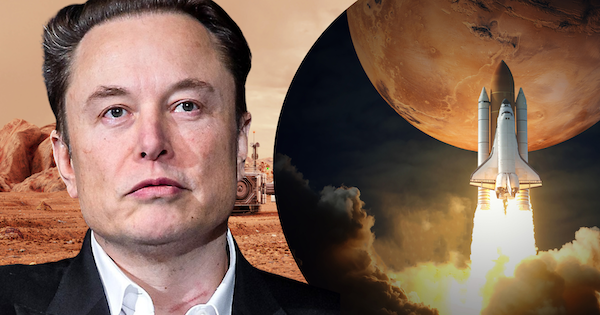
Elon Musk’s space colonization plan, often referred to as the “Mars colonization plan,” represents a bold leap into the future of human civilization. This article explores the feasibility and challenges associated with Elon Musk’s space colonization plan. It examines the technical, economic, and ethical dimensions of this groundbreaking endeavor. Let’s have a look:
The vision: making humanity multi-planetary
Elon Musk’s vision for space colonization is rooted in the belief that humanity should become a multi-planetary species to ensure its long-term survival. The idea is to establish a self-sustaining human settlement on Mars, serving as a backup for Earth in case of catastrophic events. Musk envisions a future where millions of people can live and work on Mars, creating a thriving and independent civilization beyond Earth.
Technical feasibility
-
Interplanetary Transport System (ITS)
At the core of Musk’s space colonization plan is the Interplanetary Transport System (ITS), now known as the Starship. The Starship is a fully reusable spacecraft designed for transporting humans and cargo to destinations like Mars. With its stainless steel construction and powerful Raptor engines, the Starship aims to make space travel more cost-effective and sustainable.
The feasibility of the Starship lies in its reusability, enabling multiple trips to and from Mars without the need to build new spacecraft for each mission. This approach reduces the overall cost of space travel, making it more accessible and economically viable.
-
Terraforming and habitability
Musk acknowledges that Mars, as it currently exists, is inhospitable to human life. Terraforming, the process of modifying a planet’s environment to make it Earth-like, is a monumental challenge. While Musk is optimistic about the possibility of terraforming Mars, many scientists and experts express skepticism. The thin atmosphere, lack of a magnetic field, and low temperatures present significant obstacles to creating a habitable environment.
Advancements in technology and our understanding of planetary science will be crucial in overcoming these challenges. Developing sustainable habitats and life-support systems that can function independently on Mars is a prerequisite for any successful colonization effort.
Economic considerations
-
Cost of space travel
One of the major challenges facing Musk’s space colonization plan is the high cost associated with space travel. Developing the necessary infrastructure, spacecraft, and life-support systems demands substantial financial investment. SpaceX aims to address this by making space travel more cost-effective through the reusability of the Starship.
Additionally, Musk envisions generating revenue for the Mars colonization project through a variety of means, including satellite launches, space tourism, and the establishment of a Mars-based economy. However, the economic viability of these revenue streams remains uncertain, and the project’s success hinges on SpaceX’s ability to create a sustainable and profitable business model in space.
-
Public and private collaboration
Space colonization requires collaborative efforts between governments and private enterprises. While SpaceX is a major driving force behind Musk’s vision, international cooperation and partnerships with other space agencies, such as NASA and the European Space Agency, are essential. Government funding and support can play a crucial role in overcoming financial barriers and sharing the responsibility of making humanity multi-planetary.
Ethical considerations
-
Planetary protection and environmental impact
As humans venture beyond Earth, the ethical implications of space colonization come to the forefront. Planetary protection, a set of guidelines aimed at preventing contamination of other celestial bodies with Earth’s microorganisms and vice versa, is a critical consideration. Strict adherence to these guidelines is necessary to preserve the integrity of extraterrestrial environments and avoid unintentional interference with potential Martian life if it exists.
Furthermore, the environmental impact of establishing human settlements on Mars must be carefully managed. Musk’s vision involves large-scale terraforming and resource extraction, raising questions about the ethical implications of altering the natural state of another planet.
-
Social and cultural impacts
The colonization of Mars raises questions about the social dynamics and cultural implications of establishing a new society on another planet. How will the colonists govern themselves? What legal and ethical frameworks will guide their actions? The establishment of a Martian civilization requires careful consideration of these issues to ensure a just and equitable society.
Additionally, the impact on the mental and physical well-being of individuals living in the isolation and harsh conditions of Mars is a significant ethical concern. Addressing the psychological challenges of space colonization, including long-duration space travel and limited social interactions, is crucial for the overall success and sustainability of the project.
Challenges and criticisms
1. Technical challenges
While Musk’s vision is undeniably ambitious, it is not without its technical challenges. The Starship, despite its innovative design, is still in the testing phase, and issues related to its heat shield, engines, and other critical components must be resolved before it can become a reliable spacecraft for interplanetary travel.
Terraforming, too, presents immense technical challenges. The scale and complexity of modifying an entire planet’s atmosphere and climate are unprecedented in human history. The timeline for achieving a habitable environment on Mars remains uncertain and may extend well beyond Musk’s optimistic projections.
2. Political and regulatory hurdles
The colonization of Mars requires navigation of a complex web of political and regulatory challenges. Issues such as international space law, property rights on Mars, and the governance structure of a Martian settlement require careful consideration. Clear and universally accepted regulations must be established to avoid potential conflicts and ensure the responsible and ethical development of Mars.
3. Public and scientific skepticism
Elon Musk’s space colonization plan has faced skepticism from both the scientific community and the general public. Some scientists argue that the technological and biological challenges associated with colonizing Mars are insurmountable with current knowledge and technology. The lack of concrete plans for addressing key issues, coupled with skepticism about the feasibility of terraforming, has led many to view Musk’s vision as overly optimistic.
What’s the purpose of Elon Musk’s space colonization plan
Elon Musk’s space colonization plan, particularly his vision for colonizing Mars, is driven by several interconnected purposes and goals. While Musk himself has articulated various motivations for his ambitious plans, some key goals include:
-
Fostering interplanetary commerce
Musk envisions a future where there is significant economic activity beyond Earth. He sees the colonization of Mars as a step towards creating a self-sustaining human settlement and eventually building a viable economy on the Red Planet. This includes the extraction of resources and the development of industries that could support a growing population.
-
Expanding human horizons
Musk is driven by a desire to expand the possibilities for human life. The goal of colonizing other planets represents a fundamental shift in our understanding of what is achievable and opens up new frontiers for exploration. Musk believes that the pioneering spirit of settling on another planet can inspire people to think beyond conventional boundaries and pursue ambitious goals.
-
Ensuring the survival of humanity
Musk has often emphasized the importance of making humanity a multi-planetary species to mitigate existential risks. By establishing a human presence on Mars or other celestial bodies, Musk envisions a backup for humanity in case of catastrophic events on Earth. These could include a large asteroid impact, nuclear war, or environmental disasters.
-
Making life multi-planetary
Musk envisions a future where life is not confined to Earth alone. By establishing human colonies on other planets, he aims to make life multi-planetary, spreading the human footprint beyond our home planet. This concept aligns with Musk’s belief in the long-term potential of space colonization as a means of ensuring the enduring presence of humanity in the cosmos.
-
Advancing space exploration
Musk is deeply passionate about advancing space exploration and making it more accessible. His companies, especially SpaceX, have been at the forefront of developing cutting-edge technologies to reduce the cost of space travel and make it more sustainable. The goal is to pave the way for future exploration beyond Earth’s immediate vicinity.
Expert opinions on Elon Musk colonization plan
Experts’ take on Elon Musk’s space colonization plans are diverse, reflecting a range of perspectives within the scientific, space exploration, and general public communities.
Supportive opinions:
-
Technological innovation
Musk’s companies, such as SpaceX, have demonstrated significant advancements in rocket technology and space travel. Supporters argue that Musk’s focus on reusability and cost reduction in rocket launches was critical for making space exploration more feasible in the long term.
-
Visionary approach
Some experts praised Musk for his ambitious and visionary approach to space exploration. They acknowledged that his plans, particularly those related to Mars colonization, could push the boundaries of human achievement and open up new possibilities for the future of humanity.
-
Interplanetary species
Musk’s argument that becoming a multi-planetary species is essential for the survival of humanity in the face of potential existential threats on Earth resonated with some experts. They believed that having a backup on another planet could be a prudent long-term strategy.
Critical opinions:
-
Risk and safety
The high-risk nature of space travel and colonization efforts was a point of contention. Critics emphasized the potential dangers and questioned the ethical implications of sending humans on long-duration space journeys to settle on a planet with harsh conditions.
-
Resource allocation
Some experts argued that the enormous financial and technological resources invested in Musk’s space ventures could be directed towards more immediate and impactful solutions to challenges facing humanity, both on Earth and in space exploration.
-
Feasibility concerns
Skeptics raised concerns about the feasibility of Musk’s plans, especially regarding the timeline for colonizing Mars. Many experts highlighted the immense technological, logistical, and biological challenges involved in establishing a self-sustaining human colony on another planet.
-
Ethical considerations
Some experts expressed ethical concerns, questioning the prioritization of space colonization over addressing pressing issues on Earth, such as poverty, climate change, and social inequality. They argued that resources could be better utilized to solve problems on our home planet.
Final take
Elon Musk’s space colonization plan represents a bold and futuristic vision for the future of humanity. While the technical, economic, and ethical challenges are substantial, the potential benefits of making humanity multi-planetary are equally profound. The success of Musk’s vision depends on overcoming these challenges through advancements in technology, international collaboration, and a thoughtful approach to ethical considerations.
SpaceX has continued to push the boundaries of space exploration with the development of the Starship and other groundbreaking technologies. As these developments take place, the realization of a self-sustaining human settlement on Mars moves from the realm of science fiction into the realm of possibility.
Of course, the journey towards space colonization is fraught with uncertainties. Even so, the pursuit of such an audacious goal exemplifies the human spirit of exploration and the relentless pursuit of a future beyond the confines of Earth. Only time will tell whether Elon Musk’s vision becomes a reality, shaping the destiny of humanity as a multi-planetary species.
FAQs
Are there alternative proposals for space colonization, and how do they compare to Musk’s plan?
Various space agencies and private entities have proposed alternative plans for space exploration and colonization, including lunar missions and deep space exploration. Musk’s plan stands out for its focus on Mars, its ambitious timeline, and the emphasis on creating a self-sustaining human settlement. Comparisons often involve considerations of cost, technology, and scientific objectives.
How does Musk address the potential ethical concerns surrounding space colonization?
Musk acknowledges ethical concerns but argues that becoming a multi-planetary species is a crucial step for the long-term survival of humanity. He contends that space colonization is not a diversion of resources from Earthly issues but a parallel effort that can inspire technological innovation, create jobs, and address existential risks to humanity.
What role does SpaceX play in Musk’s space colonization plan?
SpaceX, founded by Elon Musk, is a pivotal player in the realization of his space colonization vision. SpaceX is actively working on the development of reusable rocket technology, the Starship spacecraft intended for interplanetary travel, and other innovations crucial for reducing the cost and increasing the frequency of space missions, including those to Mars.
How does Musk address the issue of funding for space colonization?
Elon Musk envisions funding space colonization efforts through a combination of revenue from SpaceX’s commercial satellite launches and space missions, private investments, and potential government partnerships. He believes that by making space travel more routine and accessible, the costs will decrease over time, making colonization financially viable.
How Pressfarm can help you achieve success with your brand
If you’re aiming for the stars like Elon Musk, your brand management can determine your success or failure. At Pressfarm, we help companies define the right narrative in the media for their brand – either to improve their credibility or resolve a PR crisis. If you are an entrepreneur wondering how to improve your company’s publicity, get in touch with us. We can help you craft and distribute your press releases, develop compelling guest posts and design eye-catching media kits for your brand.
Learn why we are good at what we do from our customer success stories.
