
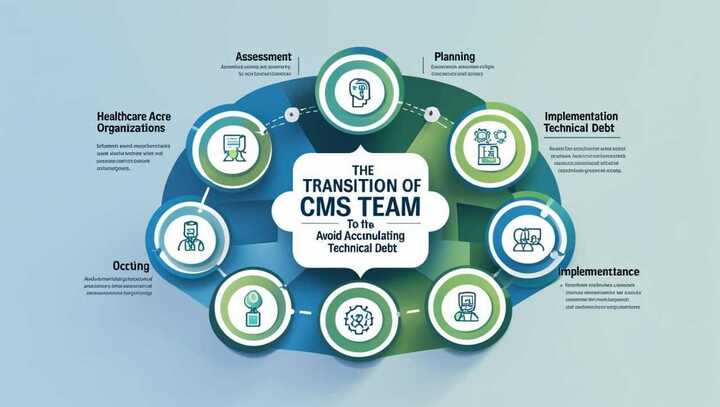
The CMS TEAM Model will launch in 2026 with mandatory participation for select acute care hospitals. This guide covers proven strategies to transition smoothly without accumulating technical debt, including cross-functional TEAM setup, data integration approaches, and scalable technology solutions that ensure long-term success.
The CMS TEAM Model is reshaping how healthcare organizations approach episode-based care and financial accountability. The mandatory Transforming Episode Accountability Model (TEAM) will advance the Innovation Center’s prior work on episode-based alternative payment models, aiming to address fragmented and costly care for Medicare beneficiaries by enhancing care coordination and health outcomes.
Healthcare organizations face a critical challenge: implementing this complex payment model without creating technical debt that could hamper future operations. Poor implementation choices made today become expensive problems tomorrow.
Fact: Nearly 40% of healthcare IT budgets go toward maintaining legacy systems instead of innovation. Organizations that rush TEAM implementation without proper planning often see 60% higher maintenance costs within two years.
Understanding The CMS TEAM Model
What Makes TEAM Different?
The TEAM Model CMS represents a significant evolution from previous bundled payment programs. TEAM builds on existing CMS Innovation Center APMs, including the Bundled Payments for Care Improvement (BPCI) Advanced model and the Comprehensive Care for Joint Replacement (CJR) model, with CJR scheduled to end in December 2024 and BPCI Advanced ending in December 2025.
Key differentiators include:
- Mandatory participation for eligible hospitals
- 30-day accountability window (vs. previous 90-day models)
- Enhanced risk-sharing mechanisms
- Universal participation requirements in selected regions
- Advanced quality incentive structures
Financial Accountability Framework
The Medicare TEAM Model creates direct financial responsibility for hospitals. Organizations must meet cost and quality targets, with spending above target prices requiring repayment to CMS. Conversely, efficient care delivery below targets earns bonus payments.
Note: Healthcare organizations with integrated data platforms show better episode cost management compared to those with fragmented systems.
Why Healthcare Organizations Face Technical Debt Challenges
The Hidden Cost of Quick Fixes
Technical debt in healthcare IT represents accumulated inefficiencies from rapid implementations and short-term solutions. Failure to address technical debt can cause productivity to decline and slow down the delivery of features, with cumulative effects resulting in increasingly fragile systems that make improvements difficult.
Common sources during CMS transitions include:
- Disconnected data systems across departments
- Poor documentation of new workflows
- Rushed integration without proper testing
- Inadequate cross-TEAM communication
- Legacy system dependencies
Real-World Impact
Healthcare IT leaders juggling multiple priorities need clear strategies for handling technical debt, as organizations typically spend 30-40% of their IT budgets maintaining problematic legacy systems rather than driving innovation.
Strategic Approach to TEAM Model Implementation
1. Build Cross-Functional Leadership
Start with a dedicated TEAM migration task force including clinical, IT, finance, and administrative representatives. Organizations with cross-functional governance reduce technical debt during major transitions.
The task force should:
- Establish clear communication channels
- Align on implementation milestones
- Create accountability frameworks
- Document decision-making processes
- Monitor progress against objectives
2. Integrate Data Across The Care Continuum
Healthcare organizations generate 2.3 trillion gigabytes of data annually, yet 97% remains unused due to fragmentation across systems.
Successful Digital Health Platform integration requires:
- Unified EMR, billing, and post-acute care data
- Single source of truth for cost and quality metrics
- Real-time analytics capabilities
- Predictive modeling for episode forecasting
- Interoperable communication standards
3. Adopt Scalable Technology Solutions
Avoid monolithic system overhauls that increase complexity. Instead, prioritize:
- Modular, interoperable platforms
- Incremental upgrade capabilities
- Strong vendor support and documentation
- API-first architecture approaches
- Cloud-native scalability options
4. Standardize Workflows and Governance
Organizations with standardized workflows see fewer implementation errors and faster deployment times compared to those without clear governance frameworks.
Essential standardization areas:
- Data handling procedures
- Content management protocols
- Care coordination workflows
- Quality measurement processes
- Compliance reporting requirements
Physician Engagement and Care TEAM Alignment
Building Accountability Through Transparency
The CMS TEAM Model’s success depends heavily on physician buy-in and active participation. Effective strategies include:
- Granular physician-level performance insights
- Patient-level outcome tracking
- Shared reconciliation payment structures
- Collaborative quality improvement initiatives
- Regular feedback and communication loops
Overcoming Resistance to Change
Fact: 68% of physicians initially resist new accountability measures, but organizations with strong communication and transparency see 80% adoption rates within six months.
Continuous Monitoring and Performance Optimization
Real-Time Dashboard Implementation
Successful TEAM model participants implement:
- Cost tracking dashboards with daily updates
- Quality metric monitoring systems
- Episode performance alerts
- Comparative analytics against benchmarks
- Predictive risk stratification tools
Iterative Improvement Processes
Regular system performance reviews help identify and address emerging technical debt before it becomes problematic. This includes:
- Monthly system performance assessments
- Quarterly workflow optimization reviews
- Semi-annual technology stack evaluations
- Annual strategic planning updates
Result: Organizations implementing continuous monitoring reduce technical debt accumulation compared to those with reactive approaches.
Competitor Analysis: Industry Best Practices
Leading Healthcare Organizations’ Strategies
Major hospital systems preparing for TEAM implementation focus on:
- Integrated analytics platforms for unified data views
- Advanced predictive tools for financial risk management
- Care coordination technology investments
- Physician engagement and alignment programs
Common Implementation Challenges
Based on industry analysis, organizations frequently encounter:
- Data lag between systems is causing reporting delays
- Fragmented information across departments
- Physician resistance to new accountability measures
- Administrative burden increases during transition periods
Measuring Success and ROI
Key Performance Indicators
Monitor these metrics to ensure successful implementation:
- Episode cost variance from targets
- Quality measure achievement rates
- Physician engagement scores
- Technical system uptime and performance
- Time-to-resolution for system issues
Financial Impact Tracking
Insider Tip: Establish baseline measurements before TEAM implementation to accurately track improvement over time. Organizations with clear baselines show better ROI tracking accuracy.
Make Your TEAM Model Implementation Futuristic
Technology Evolution Considerations
As healthcare technology continues advancing, ensure your TEAM model infrastructure can adapt to:
- Emerging AI and machine learning capabilities
- Enhanced interoperability standards
- New regulatory requirements
- Evolving patient engagement technologies
- Advanced predictive analytics tools
The Digital Health Platform landscape is rapidly evolving, making scalable and flexible implementations essential for long-term success.
Takeaway
Transitioning to the TEAM Model CMS represents both a significant opportunity and a challenge for healthcare organizations. Success requires strategic planning, integrated technology solutions, and strong organizational alignment to avoid technical debt accumulation.
Organizations that invest in proper implementation frameworks, cross-functional governance, and scalable technology solutions position themselves for long-term success in value-based care arrangements. The key is starting preparation now, before mandatory participation begins in 2026.
All set to navigate the CMS TEAM Model transition without the technical debt headaches?
Persivia specializes in helping healthcare organizations implement value-based care solutions that scale. Our proven methodology has helped hundreds of hospitals successfully transition to episode-based payment models while maintaining operational efficiency and driving better patient outcomes.
Don’t let technical debt derail your TEAM model success. Partner with healthcare analytics experts who understand the complexities of modern healthcare IT and can guide you through every step of the implementation process.
Get in touch today!
